Shifra Brown
Yavneh Girls, King David High School Manchester
8th grade
UK
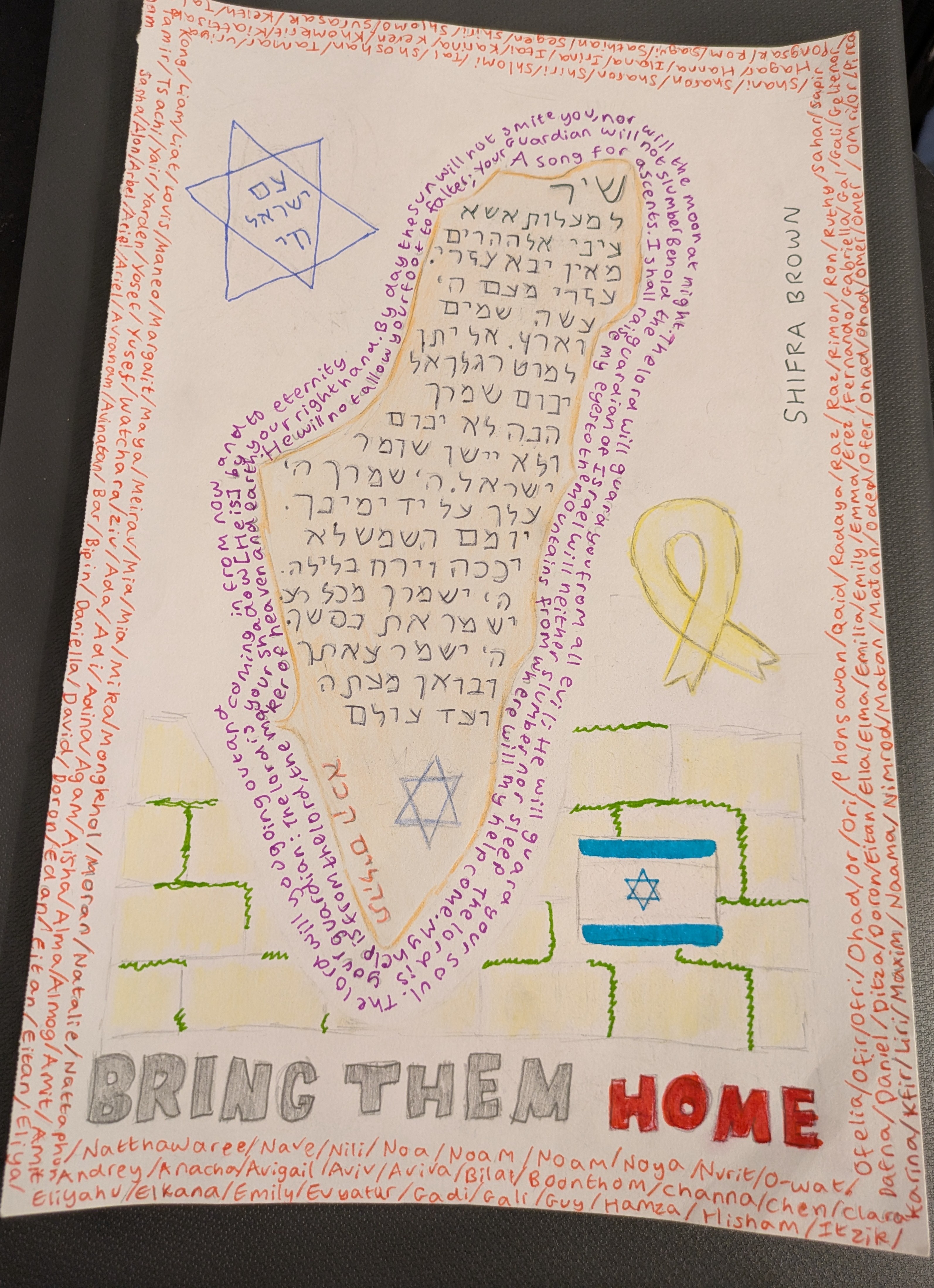
I incorporated the map of Israel at the centre, filled with Tehillim 121, a prayer for protection, to symbolise Israel as a place of faith and resilience. Surrounding the map, I wrote the names of the hostages to highlight the personal and human impact of the ongoing crisis. The Kotel and Israeli flag represent Jewish history, identity, and the strength of the Jewish people. The yellow ribbon is a symbol of hope and the collective demand for the safe return of those taken. Finally, the bold phrase "BRING THEM HOME" serves as a direct and urgent call to action, emphasising the need for unity and support. Symbolism of Israel's Map – The central focus is the shape of Israel, filled with Hebrew text, likely a prayer or Psalm, which connects to Jewish faith and identity. This represents Israel as the spiritual and historical homeland of the Jewish people.
Jewish and Israeli Symbols – The Magen David and the Israeli flag reinforce Israel’s central role in Jewish life and unity. These symbols highlight Israel as a nation of resilience, faith, and identity.
The Western Wall – Depicting the Kotel connects to Jewish history and prayer, reinforcing Israel’s role as a sacred place of hope, remembrance, and continuity.
Names of Hostages & Call for Action – The text "BRING THEM HOME" and the names surrounding the poster highlight the ongoing crisis of kidnapped individuals, likely referring to the hostages taken by Hamas. This reflects the deep value Israel places on protecting and rescuing its citizens, as well as the unity of the Jewish people in times of struggle.
Tehillim 121 – The Hebrew text is from Tehillim 121, a prayer for protection. This underscores Israel’s role as a guardian of the Jewish people, a place of refuge and strength in times of danger. My poster conveys a powerful message of unity, resilience, and the urgent call for the safe return of the hostages. It highlights Israel's role as the heart of the Jewish world, a place of faith, identity, and protection. I was inspired by historical letters and prayers written during times of crisis, particularly those from Jewish communities seeking protection and unity. The collection of Tehillim used throughout Jewish history influenced my choice of Perek 121, which expresses trust in divine guardianship. These sources reinforced the connection between past struggles and the present, shaping my poster as both a reflection of history and a call for action today.

